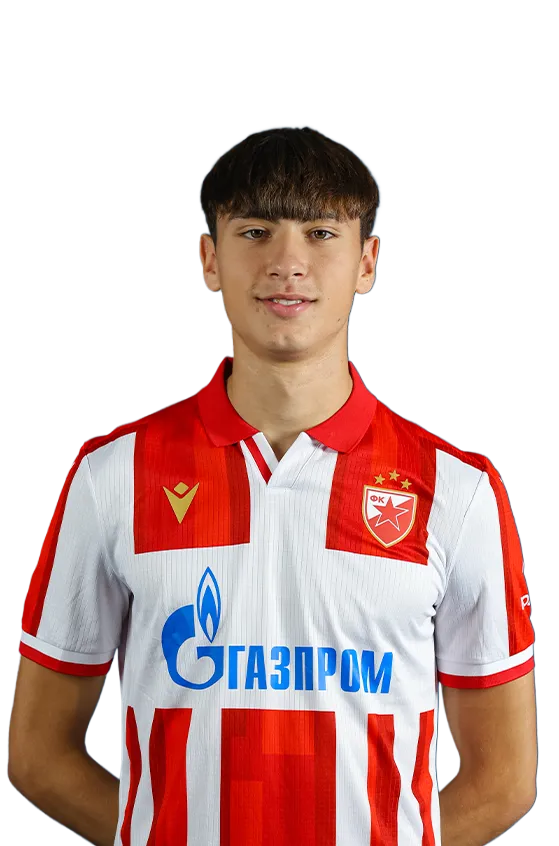
Scouting Report · Attackers · Target Forward · December 2025
Centre-Forward / Target Forward

Aleksa
Damjanović

There is a version of this profile that becomes very easy to believe in very quickly. A teenager with size, aerial presence, soft touch, and genuine connective instincts is already rare. Damjanović is not a finished striker yet, and the final action still fluctuates too much, but the football between the goals often looks older than the player himself.

Aleksa Damjanović
Player Information
Date of Birth
Dec 4, 2008
Nationality
🇷🇸 Serbian
Parent Club
Red Star Belgrade
On Loan At
Grafičar
Position
CF
Foot
Left
Height
1.98m
Market Value
€800K
Contract Until
Jun 2028
League
Prva Liga
8.5
B.A.S.E. Potential
Out of 10
7
Travel Ready
Out of 10
Dec '25
Date Scouted
Most recent
Role and positioning

Player Profile

Target Forward
Centre-Forward
Not a battering ram. A 1.98m striker who plays with the touch and reading of a technical number ten, whose body happens to be built for dominating a penalty area. He drops between the lines to connect, cushions the ball under pressure, lays off first-time with timing and disguise. He wins headers through positioning and early body movement, not raw power. Not a facilitator who does not score — a connector who also scores, or will. The finishing is still finding its consistency. Everything around it already points somewhere significant.
4–3–3 Shape
GK LB LCB RCB RB LCM CM RCM LW ST RW
Damjanović — highlighted position
Heatmap
Zone of influence
On and off the ball

Observed Behaviors

On the Ball

  • The touch is what you notice first. Soft for his size, opens his body quickly, stays composed when pressed from behind. For a 1.98m striker, first touch under pressure at this level of consistency is genuinely uncommon. It makes everything else possible.

  • Links play with both feet and real intent. Drops to receive, lays off first-time, finds channels for runners with disguised passes. The long pass accuracy (80th percentile) confirms the range when the picture opens. He distributes to advance, not just to recycle.

  • Finishes with placement, not force. Prefers accuracy over power, aligns his hips correctly, and is comfortable striking with either foot. The composure that is absent in front of goal is present everywhere else. That specific inversion is worth naming: the hesitation when multiple options appear is not nerves or indecision in general. It is a finishing-specific problem, which makes it a coaching problem rather than a character one.

Off the Ball

  • Aerial work is built on timing, not height. 89th-percentile aerial duel win rate in the Prva Liga, won against men. He arrives early, bends correctly, attacks the ball at the near post. The height would produce nothing without the movement intelligence behind it.

  • Off-ball movement is the most developed quality in the profile. Reads centre-back orientation, peels off shoulders, drops to create space for runners. He works constantly to construct situations rather than waiting for them. The scanning is proactive, the positioning adjustments are continuous, and the effort is always present even in phases where he does not receive.

  • Presses with workrate, not yet with structure. Constant engagement. The timing of when to press and from which angle is still being refined. The engine is running; it needs direction. Given the age, this is expected and almost certainly coachable faster than the aerial or touch qualities would have been.

Player DNA

Trait Classification

The player as experienced is in the behaviors section. This section answers a different question: what happens to each trait when the football around him changes?

Pure Traits

Will Travel
First touch quality
Travels because it is balance-based rather than tempo-based. Faster pressing and harder contact at the next level test it differently but do not remove it. The touch is not a product of the Prva Liga's pace.
Aerial timing and positioning
His aerial success comes from reading the flight and arriving first, not from physical dominance. That makes it more scalable than the raw duel numbers suggest. Better deliveries at the next level may actually increase his output here.
Two-footed technique
Cannot be forced onto a weaker side. This is a structural advantage that does not depend on opposition quality. The only question is whether the decisiveness to use it arrives before a defender can readjust.
Off-ball movement intelligence
The reading of defensive positioning, the near-post timing, the space-creating drops — all of these are cognitive habits that are already formed. The defenders get better; his reading of them improves with the challenge.

System Traits

Environment Dependent
Pressing output
Effective pressing effort; effectiveness multiplies sharply in well-organised collective structures where triggers and angles are pre-defined. In a disorganised pressing system his effort produces less than it should. The quality of the system around him changes this output more than his own development will in the short term.
Ball-carrying range
Works in the Prva Liga when space opens late. In transition-heavy environments against faster, higher-line defences, the lack of separation burst reduces how often those spaces appear. System-fit determines whether this quality shows at all.

Exposed Traits

Needs Development
Box decisiveness
The hesitation when multiple finishing options exist is the one thing in this profile that gets punished more, not less, as the level rises. Closing windows are already present in the Prva Liga. At the Bundesliga or Serie A, they close before the extra beat he currently takes. This is the single trait that needs to resolve — the others will not determine the ceiling the way this one does.
Physical assertiveness
The frame is 1.98m and still growing. He does not yet consistently impose it. Senior centre-backs at the next level will test him earlier in the contact sequence — before the ball arrives, at the shoulder, in hold-up. The physical ceiling is enormous. The physical habit of using it is underdeveloped relative to that ceiling.
Aerial duel win rate headline
89th percentile in the Prva Liga compresses in higher competition. The intelligence behind it is real; the number specifically reflects this league's delivery quality and the physicality of competing forwards. Apply a meaningful discount before projecting the headline figure forward.
Player profiles

Athletic, Cognitive & Psychological

Athletic Profile

Frame
1.98m, still developing. The physical ceiling is obvious. What is less obvious — and more valuable — is that the coordination and lower-body flexibility already present means he will not become slow or cumbersome as the frame fills out. The challenge is growing the strength without losing what makes the touch and movement qualities what they are.
Coordination
Better than almost any comparable height striker at this age. Handles the ball at pace, remains balanced through contact, finishes from awkward angles. Appears clunky to the eye. The technique says otherwise.
Acceleration
Medium. Stride length over distance, not burst over short distances. This is a structural constraint and unlikely to change significantly with development. System fit needs to account for it.
Aerial ceiling
Strong and rising. Timing and early positioning amplify the height. He attacks the ball; he does not simply arrive for it. The downward power on headed finishes is consistently present.

Cognitive Profile

Spatial scanning
Well above age in off-ball reading. Identifies blindside gaps before service arrives, adjusts positioning based on defensive shape rather than waiting for cues. The 92nd-percentile second assists per 90 is a data expression of the same quality: he sees two actions ahead.
Processing in possession
Fast when the role is connecting. First-time layoffs, disguised passes, hold-up under pressure — all processed quickly and executed cleanly. The cognitive speed that slows is the final-third decision when a goal is the next action.
Box decision timing
Still developing. He sees the options correctly but commits to one a beat late. This is coachable — and more specifically, it is the kind of thing that senior football resolves through volume of finishing situations rather than through tactical instruction.
Adaptability
High. Functions as a connector, target, or second-ball threat depending on what the game requires. Does not insist on one mode. This system flexibility is a meaningful asset across multiple environments and will become more valuable as the competition level rises.

Psychological Markers

Workrate
Constant and unconditional. Always competing, always chasing, throws himself into contact situations. For a 17-year-old in senior football this kind of consistent engagement is a character signal, not an accident of the system.
Patience
Unusual. Does not overcommit, trusts the play to develop, absorbs contact without losing structure. There is a strange composure in everything except the finishing moment — and that specific gap between general calmness and finishing hesitation is worth noting carefully.
Error response
Neutral. Stays engaged, does not hide after mistakes. The composure dip in decisive moments reads as developmental rather than characterological. He continues; he does not retreat.
Competitive environment
Comfortable in meaningful senior minutes at 17. The loan is working as intended. Red Star will be a different environment with different expectations. How he responds to the step up from Grafičar to the SuperLiga context is the psychological test worth monitoring.
Development

Priorities for Growth

01

Box decisiveness. Every other gap in this profile responds to physical development and coaching exposure. This one responds to finishing volume and trust. He needs to be placed in situations where the first option is the right option, repeatedly, until acting on it without the extra beat becomes habit. The instinct is there. The commitment to it is still being built.

02

Physical assertiveness. The frame needs to be used earlier in the contact sequence: holding off at the shoulder before the ball arrives, winning the position battle rather than winning the ball battle after position has already been conceded. The strength will come with physical development. Learning to engage with it at the right moment is a tactical habit that benefits from deliberate coaching now.

03

Pressing triggers. The workrate is unconditional. The recognition of when to press — body shapes, goalkeeper distribution cues, the precise moment a centre-back's head goes down — is still reactive rather than proactive. This is a pattern-recognition problem, and it develops through match volume and tactical instruction more than individual training.

04

Physical development without sacrificing coordination. As the frame fills toward full senior weight, maintaining the balance and lower-body flexibility that make the touch and carry qualities what they are is the single most important physical development challenge. The coordination is what separates this profile from a generic target man. It is worth protecting deliberately.

Transferability

Travel Readiness Score

7
out of 10
Travel Ready

The first touch, aerial timing, combination play, and off-ball movement travel. These are formed habits that will not be undone by higher competition. The profile is already operating above age in the dimensions that matter most for this striker archetype.

The 7 sits below the ceiling for one honest reason: the goal output has not arrived. A club buying Damjanović is buying what the underlying qualities promise, not what the conversion numbers currently confirm. At €800K and 17 that is a reasonable bet, but it is a bet.

The Bundesliga is the natural environment. German football produces the wide service, transition opportunities, and possession structures that feed exactly this type of striker. The Eredivisie works as an intermediate step. Serie A at the right club — organised, aerial-emphasis, combination-oriented — also fits. The Premier League's pace and defensive line aggression is probably a step too early before the box decisiveness and physical assertiveness are more developed.

League by league

Transferability Projections

League context note: The Serbian Prva Liga sits well below the SuperLiga and further below UEFA's top tier. All scores below apply a significant discount for the step up in defensive quality, pressing intensity, and delivery precision. The physical and technical qualities transfer. The production numbers require substantial discounting before projecting forward.
Premier League
5.0
Transition frequency and pace of play are the specific problems. His acceleration does not match what English defensive lines demand in open play. The touch and aerial quality would show in the moments they could arrive. Those moments would be fewer and faster than in most other leagues at this stage of development.
Bundesliga
8.0
The best current fit. Wide crossing situations, transition opportunities, structured possession play, and appetite for technically gifted tall forwards. The environment is built for what he is becoming. Multiple Bundesliga sides have deployed strikers of this archetype successfully at similar development stages.
La Liga
6.0
The combination play and scanning translate into Spanish possession structures. The constraint is that La Liga's compact defensive blocks limit the aerial and hold-up opportunities this profile generates most value from. Club-specific: mid-table sides that play directly suit him considerably more than possession-heavy elite clubs.
Serie A
7.0
Italian football's tactical structure and continued emphasis on aerial quality and hold-up play align with his strengths. Movement and timing fit the league well. The main constraint is decisiveness in compact areas — Serie A defenders close windows quickly. The second-best current fit after the Bundesliga.
Ligue 1
5.5
The physical profile of Ligue 1 defenders and frequency of duels suit his frame. The constraint is that Ligue 1 rewards explosive pace and physical assertiveness both of which are still developing. His timing-based game requires more structure than French football's chaos tends to provide consistently.
Eredivisie
7.5
The ideal developmental bridge to the Bundesliga. The Dutch league maximises touch, link-up, and aerial timing while providing regular senior minutes against a level that will test the box decisiveness without punishing it catastrophically. If a direct Bundesliga move is unavailable at this price, this is the correct interim environment.
Jupiler Pro League
6.5
Physically appropriate, service-rich enough for regular opportunities, and tactically varied enough to develop multiple aspects of the profile. Not the optimal ceiling environment, but a clean entry point if the Eredivisie and Bundesliga are unavailable at this price.
Risk assessment

Four-Axis Risk Profile

Each axis scored independently 1 to 5, where 1 is minimal risk and 5 is extreme risk.

2 out of 5
Development
Low risk

900+ senior minutes at 17, parent club Red Star, consistent upward trajectory. Gaps are developmental, not structural. The physical base is still growing, which adds ceiling rather than risk.

2 out of 5
Psychological
Low risk

Constant competitive engagement, neutral error response, unusual patience off the ball. The composure dip in decisive moments reads as age-related variance, not a character signal.

1 out of 5
Market
Minimal risk

€800K at 17 with a contract to 2028 and Red Star as parent club. The entry point is low enough that the risk of overpaying for an unconfirmed ceiling is minimal. Physical tools alone preserve resale floor.

2 out of 5
Systemic
Low risk

Combination play, aerial intelligence, and off-ball movement give him flexibility across system types. Better in possession-oriented environments but functional in several others. Not a one-system player.

Risk scale reference
1
Minimal
No meaningful concerns. Proceed with confidence.
2
Low
Minor concerns, unlikely to affect outcome materially.
3
Medium
Real concerns that require active management or monitoring.
4
High
Significant exposure. Could materially affect ceiling or value.
5
Extreme
A structural problem unlikely to be resolved through development.
Statistical profile — Serbian Prva Liga 25/26 · CF · 900+ mins

The Shape of the Profile

Almost everything that describes what happens before the goal — aerial positioning, shot quality, creation, second assists — sits in the top half of the dataset. Almost everything that describes the goal itself sits near the bottom. That is not a random distribution. It is a description of a player whose mechanism is already working correctly, waiting for the finishing to catch up.

Statistical Fingerprint — Serbian Prva Liga peers

Percentile vs Prva Liga CF/ST players with 900+ mins, 25/26 season

Metric
Distribution of peers
Value / Pct.
Goal output
Peer distribution
Damjanović value
Peer comparison — Prva Liga 25/26 · CF/ST players · 900+ mins
Goal threat vs. creation & link
Composite percentile rankings. Goal threat: NPG per 90, npxG per 90, shots per 90, touches in box, goal conversion. Creation & link: xA per 90, shot assists per 90, aerial won %, progressive passes per 90, pass accuracy.
Aleksa Damjanović
Under 21
21 to 29
30+
Hover any dot for details. Damjanović sits low on goal threat but at median on creation and link. No other 17-year-old in this pool is playing 900 minutes at all.
Final assessment

Verdict & Potential Rating

Scout's Verdict

Buy him for what he already solves. The hardest parts of playing centre-forward at the top level — reading space, connecting play, winning headers, staying patient, keeping quality under pressure — he already solves at 17. The finishing is the last thing to resolve, and it is almost always the last thing that does. At €800K, the infrastructure is available at a price that makes the wait rational even in the worst reasonable scenario.

What travels

  • First touch under pressure: balance-based, not tempo-based; functions at this level and will function at the next
  • Aerial timing: movement-intelligence-driven, not size-driven; more scalable than the raw duel numbers suggest
  • Combination play: drops, lays off with disguise, distributes over distance; real system flexibility across multiple environments
  • Off-ball movement: reads defensive positioning, constructs positions before service arrives; a cognitive habit already formed at 17
  • Shot quality: 89th-percentile npxG per shot — the positions are already elite; the conversion just needs to catch up

What must be addressed

  • Box decisiveness: the one beat of hesitation when multiple options exist; gets more costly, not less, as windows close faster at higher levels
  • Physical assertiveness: 1.98m of frame not yet being imposed consistently in shoulder contact before the ball arrives
  • Pressing trigger recognition: unconditional effort, still reactive rather than proactive in reading when and from where to press
  • Acceleration: medium at best; structural constraint that system fit needs to account for, particularly in high-line transition environments
B.A.S.E. Potential Rating
8.5/10
⚽⚽⚽⚽⚽⚽⚽⚽

Projects as a first-choice striker at a top-five European league club: technically gifted, aerially reliable, combination-oriented. The ceiling moves toward 9 if the box decisiveness resolves and the physical assertiveness matches the frame. The floor is a Bundesliga or Eredivisie starter who creates as much as he scores. Both outcomes represent excellent value at this price and age.