A 17-year-old who scored seven goals in 18 SuperLiga appearances through movement and timing alone, without the technical elaboration you would expect the numbers to require. Currently sidelined with an ACL tear sustained September 2025. The profile is worth understanding now.
Cuts inside to finish, not to combine. Receives from the left and the first read is always the shooting lane. The instinct is automatic — it makes him predictable to organized defenses and effective against disorganized ones.
Composed in 1v1 finishing situations. Calm close to goal even when the setup was not. Low, precise, toward the far corner. The execution holds even when body balance is imperfect. Cold at 17 in senior football.
Beats defenders through timing, not burst. Reads the defender's weight and goes when they are committed. Around-average separation; relies on reading the moment rather than creating it athletically.
Avoids the left foot in high-leverage moments. Will take a harder right-foot attempt from a worse angle rather than use the left in a simpler position. The preference is absolute enough to be a habit, not a gap.
Elite blindside timing. Works the line between offside and onside with precision. The two goals against TSC in the Conference League came from reading the defensive line's movement and committing at the exact moment it was wrong-footed.
Rebound and deflection reader. Positions for the second ball while others are still tracking the first. The header scored at 178cm in a packed box against bigger defenders was positioning, not athleticism.
Anticipates opposition distribution to press. Gets in the right place before the ball arrives, which is why the fouls-drawn number is so high — defenders run out of options.
Most dangerous when the game is stretched. Less effective in slow positional attacks against set defenses. The movement that generates his advantage requires space that compact blocks do not provide.
Recover first-step sharpness post-surgery. The acceleration was below average before the injury. Everything in this development list sits behind this question in importance — the profile does not unlock at the next level if the physical sharpness to execute the movement reads does not return. That takes 12 to 18 months of match data to answer honestly.
Integrate the left foot as a genuine threat. The avoidance is a preference, not a capability gap, which makes it coachable. Higher-level defenses will steer him right consistently. Rehabilitation is the right window to build the habit — technical work is available when physical load is not.
Develop a pre-shot scan habit. The 5th-percentile shot assists are not a ceiling — they are a cognitive habit. The same spatial intelligence that generates his goal threat would generate assists if directed outward before the shot decision. It requires a consistent check, not new skills.
Build physical robustness in static duels. When defenders get goal-side and hold without space to accelerate through, his effectiveness drops sharply. Upper-body strength and shielding technique are the practical levers. The frame is there; the application is not yet.
The pre-injury score sits closer to 7.5. The blindside timing, the finishing composure, the spatial intelligence — none of those are products of the SuperLiga environment, and none disappear with a knee injury. A club buying the profile as it existed through summer 2025 was buying something genuine.
The 6.0 reflects the honest discount for what is currently unknown. A ligament injury on a winger whose game depends on timing and directional change carries a different risk than the same injury on a central midfielder. The movement patterns that produce the goal output are exactly the ones under the most uncertainty in recovery.
The right acquisition model is patient. Monitor the return, acquire somewhere in the 12 months post-comeback, and commit to the full development cycle. A club that moves before the return data exists is taking a genuine gamble, however attractive the pre-injury profile was.
Projections assume a full physical recovery. Scores reflect the pre-injury profile.
Each axis scored independently 1 to 5, where 1 is minimal risk and 5 is extreme risk.
Significant injury at 17 on the plant leg of a movement-dependent winger. The cognitive and technical base is strong. Whether the physical base recovers fully enough to unlock them at the next level requires 12 to 18 months of post-return data to answer.
Composure in scoring situations, consistent defensive engagement, stable mentality after errors — all pointing toward genuine psychological solidity. The injury response is unobserved; the pre-injury profile gives reason for cautious optimism.
€1M is a reasonable valuation in normal circumstances. Post-surgery the market will discount further — which is exactly when attentive clubs can move on a profile the price does not yet reflect.
Clearly has a best environment — transition-heavy, high defensive lines, game state that creates stretched phases. In settled positional systems against compact blocks, the output drops significantly. The system matching is not optional for getting the best version of this player.
Movement output (fouls drawn, accelerations, progressive runs) on the horizontal axis, finishing quality (npxG per shot, goal conversion, np goals) on the vertical. At 17, Bondžulić sits in a position most of the senior forwards in this dataset do not reach.
Bondžulić is not a volume winger and he doesn't try to control games from wide areas. He spends more time waiting, drifting, and reading the line than demanding the ball, and more often than he should, he arrives into space without pressure. The numbers point you in that direction, but they don't fully explain it. A 98th-percentile conversion rate paired with low shot volume usually suggests either restraint or variance. Here it reads as selectivity, but he is not selective in the way that word usually means. He simply does not need many attempts because the attempts he gets are better than the ones most forwards generate for themselves. The positions he arrives in produce higher-quality expected goals than the average forward sees. This is not luck or overperformance. It is the measurable outcome of movement that consistently puts him in the right place before the ball arrives.
The movement is the core of the profile. He plays on the edge of the line in a controlled way, not a frantic one. The runs feel pre-decided rather than reactive, and there is a calm to how he enters scoring situations that doesn't match his age. It shows most clearly in 1v1s. The setup is not always clean and the body shape can be awkward, but the finish holds. That part already looks stable. What sits underneath it is less complete. On the ball, he is narrower than the output suggests. He cuts inside to finish, not to combine, and the decision is made early and rarely adjusted once he receives. He creates separation through timing and angle rather than burst or technical manipulation. It works at this level. It is less certain when defenders stop committing as easily.
The surgery changes the conversation. The intelligence that produces the movement — the blindside timing, the offside-line reading, the anticipation of second balls — does not live in the ligament. It lives in the head. That remains. What the injury puts at risk is the physical sharpness required to execute those reads against better defenders in tighter spaces. The pre-injury first step was already below average. If the recovery restores it to that same level, the profile holds. If it does not, the runs will arrive a half-step later, and at the next level, a half-step is the difference between scoring and being blocked.
So the evaluation sits there. The scoring output is real and built on movement that looks instinctive rather than coached, but it is tied to structure and service more than the headline numbers suggest. In the right context, he will look like a player who is always in the right place. In the wrong one, he risks disappearing into matches where those moments never come. The question is not whether he can score. It is how often a team can consistently place him in situations where scoring is the natural result of what he already does.
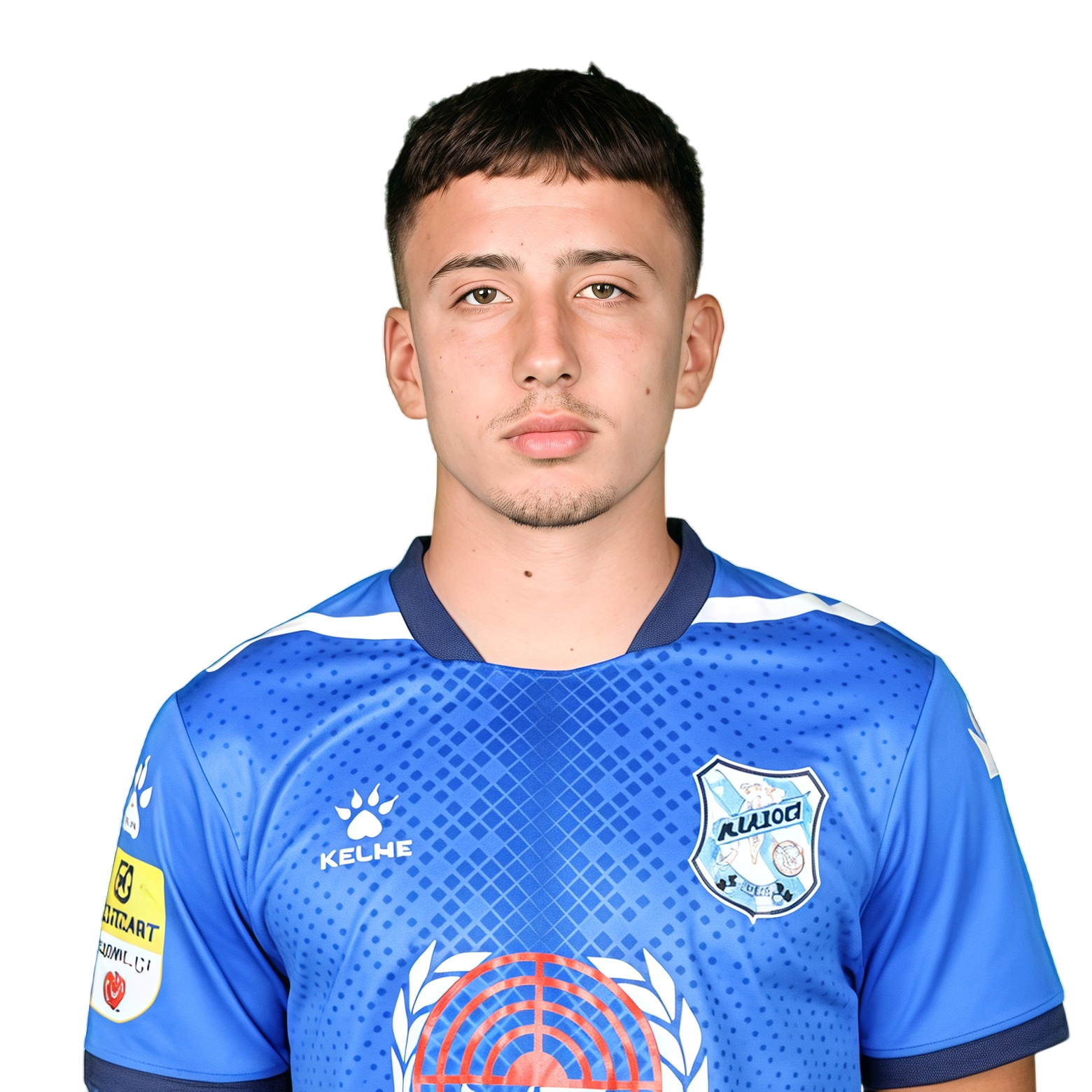
A movement-driven inside forward whose value is built on timing, spatial intelligence, and finishing composure that does not follow naturally from his technical level. At 17, in senior football, he was already generating and converting chances through cognitive qualities most wingers spend years trying to develop. The profile is worth understanding now, monitoring through recovery, and reassessing when return data gives a clearer picture. The worst-case surgical outcome does not erase the intelligence. It only limits the speed at which it can operate.
A 7 projects as a consistent starter at top-division level in a transition-based system. The ceiling of the profile is higher than the rating suggests. The surgery is the reason it is not higher — if the physical sharpness returns fully, the number moves. If it does not, it does not.