He does not appear limited by how much information he can perceive. He appears limited by how much information he chooses to solve. That distinction is the whole report. The data puts him 3rd globally in xA among U21 strikers. The tape explains exactly why the ceiling is not yet the output.
Box movement is exceptional. The best thing about his game. He sells feints to reach his spot, uses acceleration and deceleration in sequence, and arrives in the right place at the right moment with consistency that goes well beyond coincidence. When the ball reaches the ground in the box, he's there.
Scans constantly. Processes at an unusual width. He is looking up, taking in information, reading far more of the pitch than the immediate area around him. The wide perceptual field is visible in his body language before receiving and in the quality of his decision-making when the ball arrives in good position.
Pre-assist and third-assist involvement is elite. 3rd globally in xA, 3rd in assists among all U21 strikers. The passes that precede danger are already functioning at a world-class level for the age group.
Combination play in tight areas. Comfortable receiving under pressure, combining, and moving. He does not need space to participate usefully.
Confident. The whole attacking structure flows through him. Ferencváros ask him to be the reference point for the attack. He accepts that responsibility without shrinking.
Technique is the primary gap. Too many balls he cannot softly receive. A poor first touch forces him to re-enter the information-processing cycle from scratch: where is the ball now, and what has changed around me while I was dealing with it. This doubles the cognitive load on every imperfect receive.
He chooses to solve too much simultaneously. The wide perceptual field that makes him interesting also makes him slow to act. He takes in a large volume of information and then struggles to filter out the irrelevant pieces. Sometimes the simplest answer is the correct one and he misses it because he is still processing the other four.
Counterpress is conditional. He engages with genuine intensity before losing the ball. After being beaten, he disengages: head drops, arms up, no immediate recovery run.
Needs to become more physical. Aerial numbers (18th percentile) reflect both the structural gap and an application problem. He does not impose himself enough in contested situations. Both hold-up play and aerial work need deliberate development.
Very rarely shoots. The box movement is excellent. The shooting actions are almost absent. The decision to shoot is arriving too late, or not at all, because the processing cycle for the full picture has not completed before the moment passes.
The developmental story here is unusually clean for a player this cognitively complex. The technique gap and the information-filtering gap are, at root, the same problem. Solving the first creates space for the second to resolve naturally.
First touch and technical foundation. Kick a ball against a wall for an hour every day. This is not metaphorical. The first touch must stop requiring conscious attention. When it does, the cognitive load on every receive drops by half, the decision hierarchy gets more time to identify the correct answer, and the moments that are currently passing him by become available. Everything else in this section follows from this one.
Decision hierarchy for finishing moments. The box movement is already excellent. He arrives in the right place. The shooting decision is arriving too late or not at all. He needs a faster internal trigger for the shot: if I am here, in this position, with this angle, I shoot. Not after processing the full picture. Before it. This is a repetition and habit problem, not a knowledge problem. He knows where the good positions are. He needs to learn to trust the position to make the decision for him.
Physical imposition in aerial and hold-up situations. The positioning is already good. The physical contest on arrival needs to match it. Strength and conditioning work, combined with deliberate aerial challenge repetition, addresses both. This is the development priority that most directly closes the gap between where the data puts him and where the next level will test him.
Sustained competitive engagement across the full match. The conditional counterpress pattern needs to be addressed as a habit. A manager who frames defensive effort as unconditional and monitors it consistently in training will resolve this faster than one who treats it as a problem to tolerate in a creative player. It is not a tolerance issue. It is a habit that can be installed.
The box movement, perceptual width, and combinational intelligence are already functioning at a level that belongs above the NB I. The global rankings confirm this is not a domestic product: third in the world in xA among U21 strikers is third in the world.
The 7 reflects the technique gap, the information-filtering limitation, and the physicality question. None are fatal. All three are connected. A buying club that understands what it is purchasing and commits to a deliberate developmental environment around it will extract the profile quickly. A club that simply places him in a stronger league and expects the quality to appear without that support will be frustrated by numbers that do not yet match the ceiling.
A possession-dominant Bundesliga or Eredivisie club with clinical forwards is the ideal immediate next environment. He needs better receivers to convert what he creates, a system that allows him to drop deep and connect phases, and a manager who has thought carefully about how to develop a complete forward with his specific cognitive profile. The NB I has shown us what the ceiling looks like. The next step shows us whether it is real.
Each axis scored 1 to 5, where 1 is minimal risk and 5 is extreme risk.
The cognitive and movement qualities are already present at a globally elite level for the age group. The gaps are technical and habitual. Both are coachable. The developmental story is cleaner than most profiles of this complexity.
Confident, collaborative, mature beyond years in terms of role acceptance. The conditional counterpress pattern is the one visible concern and is habitual rather than characterological.
Ferencváros are a willing seller of talent. The global ranking visibility is rising. The profile is not yet priced at what the xA ranking implies it should be.
The profile requires a system that commits to a vision and a manager who has thought about what a complete forward with his specific cognitive profile actually needs. A conventional striker mandate wastes the profile completely.
The NB I numbers are strong. The global numbers are the argument. The tape then explains both why the ceiling is visible and why it is not yet the output.
The data tells you a player producing globally significant creative numbers from a developing domestic league. The tape tells you why those numbers are real and also why they are not yet the ceiling. Both are true, and the relationship between them is the interesting part.
The box movement is the first thing that stops you. He sells a feint, shifts his weight, and arrives exactly where the ball needs to be in time to do something useful with it. Then he does it again from a different starting position. And again. This is not athleticism creating opportunity. This is spatial reading already organised at a level that genuinely belongs in a stronger environment. He sees the space, commits to the run at the right moment, and arrives on schedule. The consistency of that is not something you can fake across multiple games. It is either there or it is not, and it is there.
What is also there, and what the tape makes very visible, is the cognitive bottleneck. He scans constantly. He takes in an unusually wide field of information. And then he struggles to filter it. The simplest action available is often the correct one, and he misses it because he is still processing the other options. This would be a frustrating observation if the solution were unclear. It is not. The first touch is the problem. When the ball does not arrive perfectly and requires extra attention to control, the processing cycle restarts from scratch. Now he has to solve where the ball is and what has changed around him simultaneously. That extra cognitive load is the thing most directly suppressing his output. A better first touch buys him time. More time means the filtering problem has a better chance to resolve before the moment passes.
The counterpress pattern is the one character note worth mentioning. Before losing the ball he is engaged, purposeful, effective. After being beaten he drops his head and does not recover immediately. This is a habit rather than a character problem, but it is worth naming because it is the most visible sign that his competitive engagement is not yet fully unconditional. A manager who treats sustained defensive effort as a non-negotiable and monitors it consistently will resolve this faster than one who decides it is something to tolerate in a player with his creative profile.
The xA ranking is 3rd globally among U21 strikers. The xG ranking is 34th. He is creating for others at a world-class rate and almost never pulling the trigger himself. The box movement arrives. The shooting decision does not. The game has been organised around problem-solving for everyone except himself. Developing a faster, more instinctive decision hierarchy for finishing moments is the single thing that would most dramatically change the surface numbers. The position is already correct. He just needs to trust it to make the decision for him before the full picture is assembled.
If the technique improves, the filtering problem eases. If the filtering problem eases, the shooting decision arrives on time. If the shooting decision arrives on time, the conversion rate from his box movement becomes visible in the output. That chain of improvements is not speculative. Each link is a coachable habit. What is already there, the spatial intelligence, the combinational quality, the box movement, the wide perceptual field, does not need to be built. It needs to be freed.
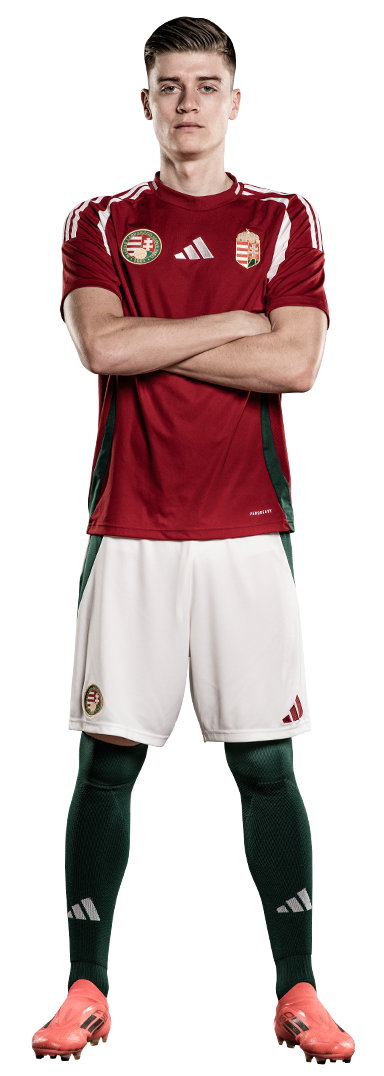
Buy the spatial reading, the combinational intelligence, and the box movement. Accept that the technique and the finishing hierarchy are active gaps that require deliberate development. Commit to a system that asks him to connect phases rather than operate as a conventional striker. The ceiling is not speculative. It is already visible in the mechanics of what he does in the right moments. The job is to make those moments more frequent.
A first-choice complete forward or false nine at a top-flight European club, capable of producing xA numbers that sit at or near the top of any league he plays in. The ceiling depends on the technical foundation being resolved and the buying club committing to a system that understands what it has purchased.